

Key Takeaways
- Therapists need a structured, ethics-centered content strategy that works with social media algorithms so their content appears in rich results and in-app search results.
- Optimizing for social media algorithms also means optimizing for citations and mentions in AI search results, including the AI features embedded within Instagram, Facebook, and TikTok, which is especially critical for therapists who work with teens and adolescents.
- According to a Pew Research Center study (2026), 12% of U.S. teens have used AI chatbots for emotional support or advice, making therapist-authored, AI-citable content both a content strategy and a way to correct misconceptions about therapeutic services online.
What is Social Media Algorithm Optimization?
In social media, algorithms are rules, signals and data that govern the platform’s operation. These algorithms determine how content is filtered, ranked, selected and recommended to users. In some ways, algorithms influence our choices and what we see on social media. —SproutSocial (2023).
As a therapist, you’re an academic, not an influencer. This distinction matters, because almost everything written about social media strategy is written for brands, e-commerce businesses, or personality-driven content creators. These articles and videos were not created with the mental health professional code of ethics in mind.
Social media algorithm optimization is the practice of structuring content, profiles, and posts so platforms like Instagram, Facebook, LinkedIn, and TikTok will recommend your content to relevant users, and so your content appears within in-app AI-enabled search results when users type in therapy-related queries.
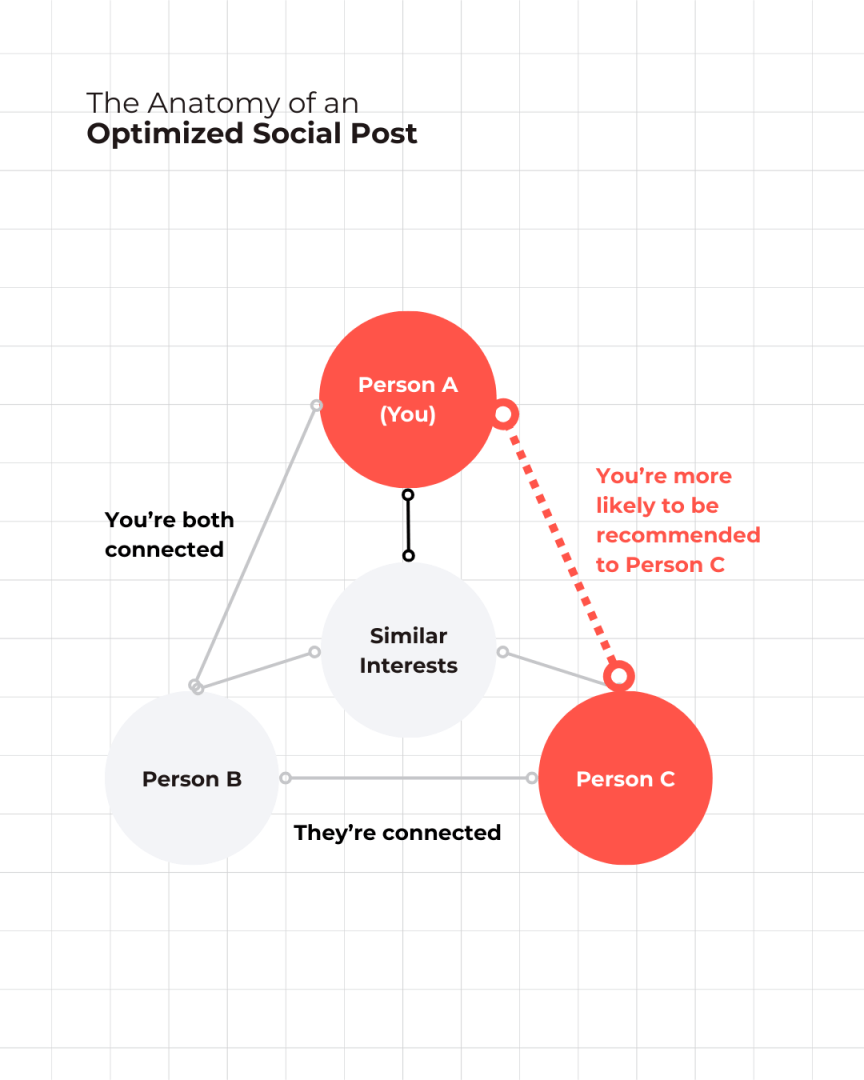
Algorithms are not random. They score content based on measurable signals like engagement, posting consistency, content relevance, profile completeness, and keyword use in captions and bios. Every element of a post either contributes to or reduces your algorithmic reach.
For a full breakdown of social media post anatomy, read The Anatomy of an Algorithm-Optimized Social Media Post.
Why Social Media Algorithm Optimization is Essential for Private Practice Visibility
Therapists’ primary social media goals are typically one of the following:
- To acquire new clients through your website, social media profiles, therapy listings, and anywhere you maintain an online presence.
- To make aware the existence of your practice and therapeutic services to online audiences that comprise of your ideal client profiles.
Without an optimized social media presence, even your most effective content will go unseen. Your social media posts should aim to reach people in the process of searching for what you offer with compelling information that convinces them to act.
Online discoverability is now a prerequisite for practice growth. Prospective clients search for therapists like you on social media similarly to how they search on Google. If your profile isn’t structured to be found, it won’t be.
Therapists and counselors need to optimize their websites, therapy listing profiles, and social media presence to appear across all search: Google and Bing search results, AI search results (like ChatGPT, Claude, Gemini, and Perplexity), and in social media apps’ search results. This is especially important for professionals who work with teens.
According to a Pew Research Center study (2026), 12% of U.S. teens have turned to AI chatbots for emotional support or advice. For therapists who serve adolescents, these numbers represent a direct, measurable gap between young people seeking support and credentialed professionals who have a presence online.
When professionals with specialized knowledge do not share their expertise online, the vacuum of potential misinformation grows with AI citations of unverified sources and wellness influencers.
As a domain expert, if you were to create original, highly specialized content that addresses misconceptions about your field, you’re more likely to be cited by AI tools across social media and search engines. This butterfly effect translates to young people seeking help receiving accurate, expert-driven information.
Posting Consistency and Building a Sustainable Cadence
Algorithms reward accounts that publish on a regular cadence, not necessarily a high-volume one. A sustainable 3–4 original posts published per week outperforms sporadic bursts followed by long silences.
Consistency is an algorithmic signal of account trustworthiness and topical relevance. It also trains the platform’s algorithm to associate your account with specific subjects and audiences over time.
The Ethical CTA: What to Say Instead of “Book Now”
For therapists, common CTAs like “DM me,” “Click the link to book a session” may constitute direct solicitation of clients, which is prohibited or cautioned against under the APA Ethics Code, the NASW Code of Ethics, and the AAMFT Code of Ethics.
Never make false, deceptive, or fraudulent statements concerning your training, experiences, services, or fees on social media.
Never directly invite someone to your booking page within individual social posts or direct messages. Similarly, never follow or invite a connection from prospective or existing clients, they must voluntarily follow you based on the quality of your content.
Appropriate CTAs invite the audience to engage or take a self-directed next step: “Save this post if this resonated with you,” or “Visit my website to learn more about my approach to trauma-focused therapy.” These CTAs are algorithmically effective and focus on your marketing messaging rather than clinical transactions.
Remember that your goal is to earn the trust of those who follow your social media profiles by providing helpful content that guides them along their journey to discovery and support. Your focus and content should remain centered around their needs and objectives.
For platform-specific algorithmic strategy, read our two articles, Instagram’s Algorithms: How Instagram Delivers Ranked Content and LinkedIn Strategy: How Small Businesses Get in Front of Prospective Clients.
Frequently Asked Questions (FAQs) About Social Media Algorithm Optimization for Therapists
It means structuring your content, profile, and posting schedule so platforms like Instagram, TikTok, LinkedIn, and Facebook surface your posts to people actively searching for mental health support.
Consistency matters more than frequency. Posting 3–4 times per week with substantive, audience-relevant content typically outperforms daily posting of low-quality content. Algorithms reward regular, predictable activity, not volume.
Yes. By publishing educational, authoritative content that positions them as trusted experts and allows prospective clients to voluntarily follow and reach out. Direct solicitation, such as DMing prospects or inviting connections, is not recommended and may conflict with ethics guidelines from the APA, NASW, and AAMFT.
Key indicators include post saves and shares, follower growth, new email subscribers, increased website traffic, new inbound consultation inquiries, and new client sessions. Vanity metrics such as likes are far less meaningful than conversion-oriented signals.
Sources
American Association for Marriage and Family Therapy. (2015). AAMFT code of ethics. https://www.aamft.org/Legal_Ethics/Code_of_Ethics.aspx
American Psychological Association. (2017). Ethical principles of psychologists and code of conduct (2010 amendments included). https://www.apa.org/ethics/code
National Association of Social Workers. (2021). NASW code of ethics. https://www.socialworkers.org/About/Ethics/Code-of-Ethics
Pew Research Center. (2026, February 24). How teens use and view AI. https://www.pewresearch.org/internet/2026/02/24/how-teens-use-and-view-ai/
SproutSocial. (2023, October 30). Everything you need to know about social media algorithms. https://sproutsocial.com/insights/social-media-algorithms/